

When I first heard that private equity firms were buying private special education schools, my gut reaction was negative. I assumed financial return would come ahead of students. A school that serves children with profound learning needs and complicated medical conditions should not make decisions based on profit.
A longer look left me with a harder question. If investors stayed out, who would build the seats? These students need specialized staff, medical support, and a safe space. Few districts can build that for a handful of children, and the cost would be prohibitive without someone willing to front the money.
So, what role should private equity play? I looked for evidence, but as with so much in education research, the conclusions are mixed.
How Investors Entered the Field
Special education appeals to investors because the revenue is predictable. Navagant, an advisory firm that works on deals in the sector, writes that the demand “is not discretionary.” Districts must provide a free appropriate public education to every qualifying child. Federal special education funding grew from $2.0 billion in 1992 to $14.2 billion in the report’s latest figure, and students with disabilities now make up 15.2 percent of public-school enrollment. Navagant calls special education “one of the more resilient corners of education M&A [mergers and acquisitions — I had to look it up].”
Deal activity has grown. Using PitchBook data, Navagant counted 57 special education transactions in 2019. The count reached 93 in 2022 and held at 89 in 2023. Through September 2024, 58 transactions had closed, and financial buyers completed 39. Strategic buyers, meaning operating companies, completed the other 19. So, it looks like acquisitions of special needs schools may be slowing, but the whole trend was news to me.
Navagant says activity clusters in three places. Buyers have targeted Applied Behavior Analysis (ABA) and behavioral therapy providers, specialized school and district-services companies, and software and assistive technology. The report’s transaction table also lists a staffing firm that places special education professionals into district and provider vacancies. Several buyers appear again and again, which Navagant calls the signature of platform-and-add-on strategies. One school-services company, for example, bought a provider to expand into Pennsylvania and New Jersey. The report discloses one price of about $300 million for a behavioral therapy provider.
Those counts include therapy, software, and staffing, along with schools, and the report does not say how many deals involved schools. Autism therapy offers a clearer view of one segment. A JAMA Pediatrics study published in January 2026 counted 574 private equity-owned autism therapy centers in 42 states. Nearly 80 percent of the acquisitions came between 2018 and 2022.
A Mixed Record
England has the largest school-level example. Councils there spent £1.3 billion on independent and non-maintained special schools in 2021-22, up from £576 million in 2015-16, according to Schools Week. The average independent placement costs £56,710. A seat at a state special school costs £23,224. The two groups of students likely differ in need, so the gap between the different figures may be an apples-to-oranges comparison.
A Local Government Association report put earnings margins at 20.9 percent, 25.1 percent, and 26.5 percent for three large providers owned by private equity or a sovereign wealth fund. Those figures cover children’s services income, which goes beyond schools. Two of the three firms say they reinvest their profit.
The providers argue they fill a gap the state cannot. Schools Week reported that one of them opened or extended 18 schools and added 1,800 desks in a year. The trade body for independent special schools said members can open new provision in 12 to 15 months, while just one of 37 free schools the government announced in 2020 had opened in its permanent home. So, the independent schools, at least in the UK, seem better able to build schools to offer new seats more quickly than public providers. As far as quality ratings go, there is a gap, but it’s hard to say if it’s significant. The Office for Standards in Education, Children’s Services and Skills (Ofsted) rated 89 percent of state special schools as good or outstanding, compared with 81 percent of inspected independent special schools.
Research in other sectors leans negative but not uniformly. A study of more than 7 million Medicare nursing home patients found 10 percent higher mortality at private equity-owned homes, along with 3 percent fewer hours from frontline caregivers than the industry average. A 2023 BMJ review of 55 health care studies tied private equity ownership to higher costs and mixed or harmful quality, and its authors found no consistently beneficial impact. A May 2026 Health Affairs analysis of autism therapy called the net effect mixed and acknowledged expanded access for some families.
In coverage of the JAMA Pediatrics study, an Autism Speaks representative warned that growth pressure can shift focus toward volume. She also argued that well-aligned investment could expand availability, shorten waitlists, and build training and compliance systems that small providers lack. Nursing home patients are not students, so these findings show what could happen, and not necessarily how it would play out in an education setting.
Finding the Right Seat
Harford County Public Schools had 16 students on a wait list for separate special education schools during the 2023-24 school year. No nearby school offered every service those students needed. Many of the private day schools we used were outside the county and required long bus rides for the students they would serve.
We found space in a building that wasn’t a comprehensive school and chose an outside partner with experience serving similar needs. We paid for the renovation with capital dollars left over after other projects came in under budget. The classroom opened in winter 2025, midway through the school year, and enrollment settled between seven and nine students.
One classroom could not meet the range of needs across all 16 students with different IEPs. It wasn’t immediately obvious whether the model saved money, because we had spent a fair amount to retrofit the room. Of course, money wasn’t the driving variable in creating the space. We were serving students whom we otherwise couldn’t find seats for, which is the most important thing.
The Approach in Maine
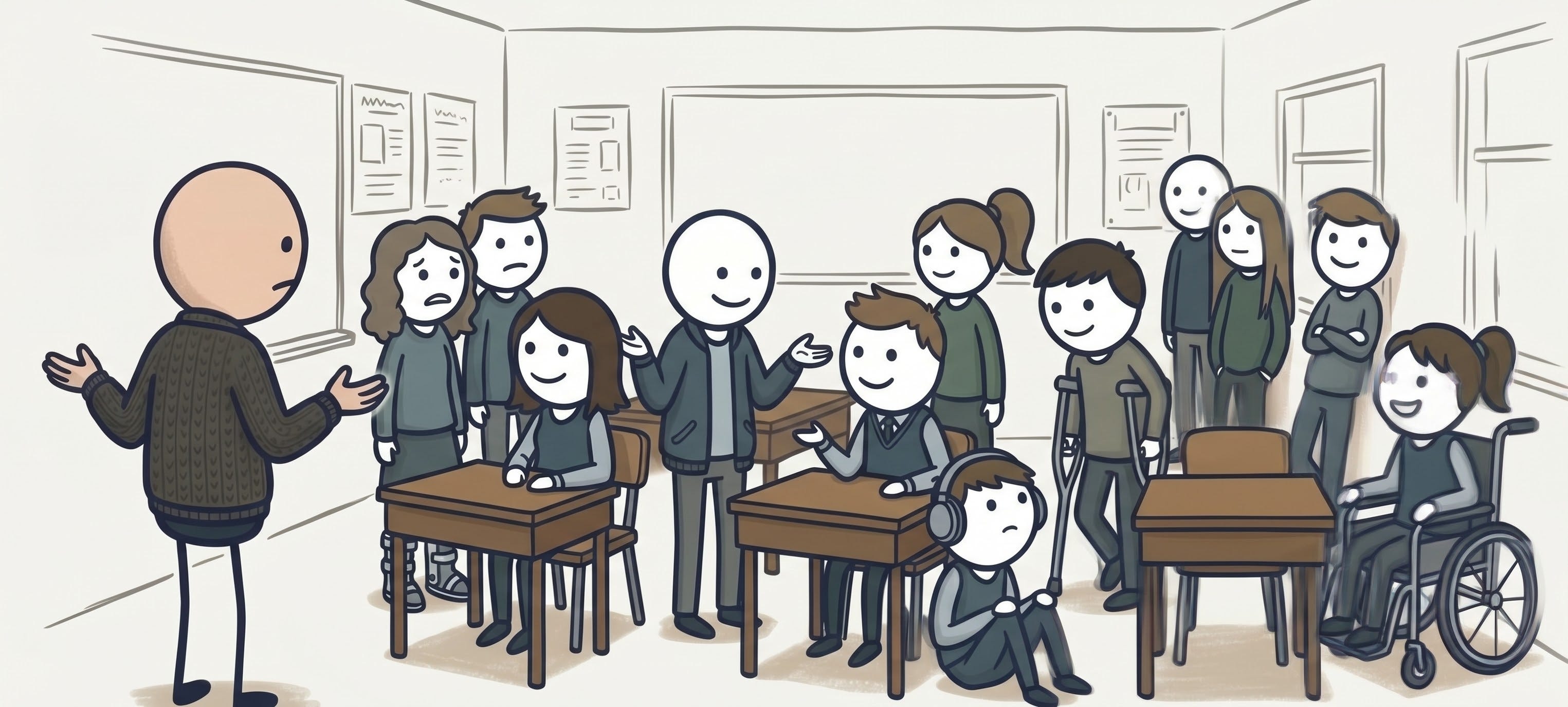
School systems in Maine collaborated to build programs that served regions across the state. A 2018 study by the Maine Education Policy Research Institute examined regional special education programs, in which neighboring districts share a program and send students to it. Administrators at one program estimated savings of $7,000 to $10,000 per student, and districts reported shorter bus rides and closer ties to home.
While these are all positive outcomes, the same study found limits—most of the seven approved programs enrolled fewer than 12 students. Member districts received priority over nonmembers, which became a source of friction, and some students still rode 45 to 60 minutes. Districts had to decide which would act as fiscal agent and leader, and small districts often lack the capacity to take that role. Programs also grew slowly because they struggled to hire qualified staff to meet students’ diverse needs.
Staffing Affects Everything
Every model I’ve found struggles with staffing. A Maryland report on the progress of its statewide Blueprint initiative found that about one quarter of special educators at the state’s nonpublic special education schools are conditionally certified, compared with 11.6 percent statewide, and it says shortages “are even more of a challenge for nonpublic schools.” The one-quarter figure came from a February 2024 meeting.
The pattern is national. The Learning Policy Institute reported in 2025, as summarized by the Council for Exceptional Children, that 45 states had special education shortages, more than in any other subject. About one in eight teaching positions was vacant or held by someone not fully certified for the assignment, and that total rose by about 4,600 from 2024. Most states allow districts to hire someone who is not fully certified only when no certified candidate is available.
Maine’s study raises the same problem. Districts there struggled to fill special education positions, and small districts often lacked the expertise to run specialized programs. The study suggests incentives, higher salaries, and dual-certification programs as ways to ease the shortage.
Questions Remain
Serving students with the most acute learning needs remains a challenge for most districts, and none of the available options are ideal. The entry of private equity into serving these students adds a new layer of complexity for school systems. The available reporting offers some insight but doesn’t answer anything definitively. My experience in Harford suggests that seats in independent special education day schools are increasingly hard to come by. Still, I didn’t find much reporting to indicate whether that is an anecdote or a national trend. If reporting from England can reasonably inform our US circumstances, independent schools with help from private equity may be better equipped to meet growing demand for new seats. But there doesn’t appear to be evidence suggesting students do better in the private schools. One thing I do know is that the special education population in this country is growing far more quickly than the overall public-school population. Similarly, special education budgets in school systems are outpacing growth in the overall operating budgets. This area needs more attention, with better research into what is happening and what best serves students.
Dr. Sean Bulson is a practitioner-scholar, professor of educational leadership, and the 2024 Maryland Superintendent of the Year. He served as superintendent of Harford County Public Schools from 2018 to 2026 and Wilson County Schools from 2011 to 2016. Subscribe for weekly posts on educational leadership, equity, and district transformation.